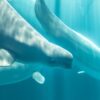
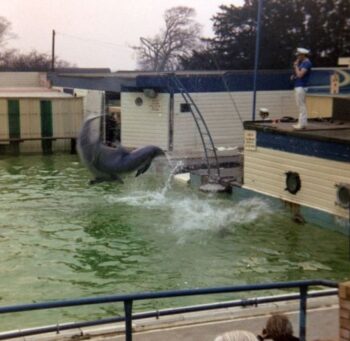
Dolphin Honey was recently euthanised due to declining health at Dolfinarium Harderwijk in the Netherlands. Wild-caught in 1970 from the Gulf of Mexico waters, Honey was one of the last dolphins to be held at Windsor Safari Park in England. Along with the other dolphins, including Smartie and Lulu, Honey was sold and transferred to Dolfinarium Harderwijk. She should have spent her life swimming vast distances, choosing her own companions, feeling the rhythms of the open sea. Instead, decade after decade, her world was concrete walls, chlorinated water, and routines dictated by humans. Even when Windsor Safari Park closed, when so much else changed, nothing truly changed for Honey. She was moved, not freed.
Marine Connection’s Liz Sandeman comments, “Fifty-eight years is a long life for a dolphin – but longevity alone doesn’t equal a life well lived. There’s something especially heartbreaking in knowing she outlived the park that confined her, yet never outlived captivity itself. Honey’s death isn’t just the loss of an animal but a quiet indictment of an entire system that normalised confinement for entertainment. She died far from the ocean she was born into, carrying a history that can’t be undone.”
All that remains now is the responsibility to remember her – and to ask, painfully and honestly, how many more lives will follow the same path before we finally choose differently.
For decades Marine Connection has advocated against keeping cetaceans in captivity – here’s why