An increasing number of dolphins (and whales) are being observed living solitary lives, separated from their family pods for reasons that remain unclear, including maturity, loss, or individual behavioural traits. While solitude itself is not necessarily harmful, concerns arise when these animals become habituated to human interaction. Marine Connection has monitored solitary sociable cetaceans for more than 25 years. In the UK alone, over 15 solitary bottlenose dolphins – most of them males – have been recorded. Globally, other species, including common dolphins and beluga whales, have also become habituated to humans through repeated interactions with swimmers. Some individuals remain in the same location for years, while others move on after a shorter period.
Keeping solitary sociable dolphins or whales wild is essential for their well-being.

In the summer of 2018, a male bottlenose dolphin named Danny became a beloved figure in Portland, Dorset. Frequently seen following boats and engaging with divers, Danny captured the hearts of many. Tragically, in October 2020, Danny was fatally injured by a vessel, passing away at around 10 years old.
In 2021, Marine Connection, in collaboration with the local community, installed a stone memorial at Portland Marina to honour his memory. While it serves as a lasting tribute, it also carries an important conservation message: solitary, sociable dolphins should be given space to maintain their wild nature and natural behaviours.
Danny’s life, and ultimately his death, is a cautionary tale about the risks posed by close human interaction and serves as a powerful reminder of the delicate balance between our admiration for wild animals and the responsibility we carry to protect them — not only from intentional harm but also from the unintended consequences of our presence.
Another solitary dolphin, Izzy, off Padre Island, Texas, was taken into captivity solely due to human interference — a preventable outcome had people respected her space in the wild. We must admire wildlife from a distance and resist the urge to interact directly with dolphins and whales. Even well-meaning human actions can cause harm or lead to captivity.
We actively protect them while also promoting their protection to the wider public through a proactive and informed approach:
- Collaborating with Local Authorities
We provide guidance, support, and tailored action plans for managing solitary cetaceans in specific areas. - Public and Media Outreach
We promote responsible behaviour around solitary marine mammals to protect their safety and well-being. - Monitoring and Reporting
We monitor known individuals and encourage sighting reports to support research and protection. - Research and Reporting
We publish reports/research updates to inform policy, practice, and the public.
Watching a solitary yet sociable dolphin or whale in the wild is unforgettable. But like humans, these remarkable animals also need personal space.
First published in 2008, the third edition of our LONE RANGERS report (2024) continues to explore solitary cetaceans in depth. It examines the theories behind their behaviour, the process of habituation, and the risks to both cetaceans and humans. By reviewing known cases and current protective legislation, the report provides recommendations to support their short- and long-term protection.
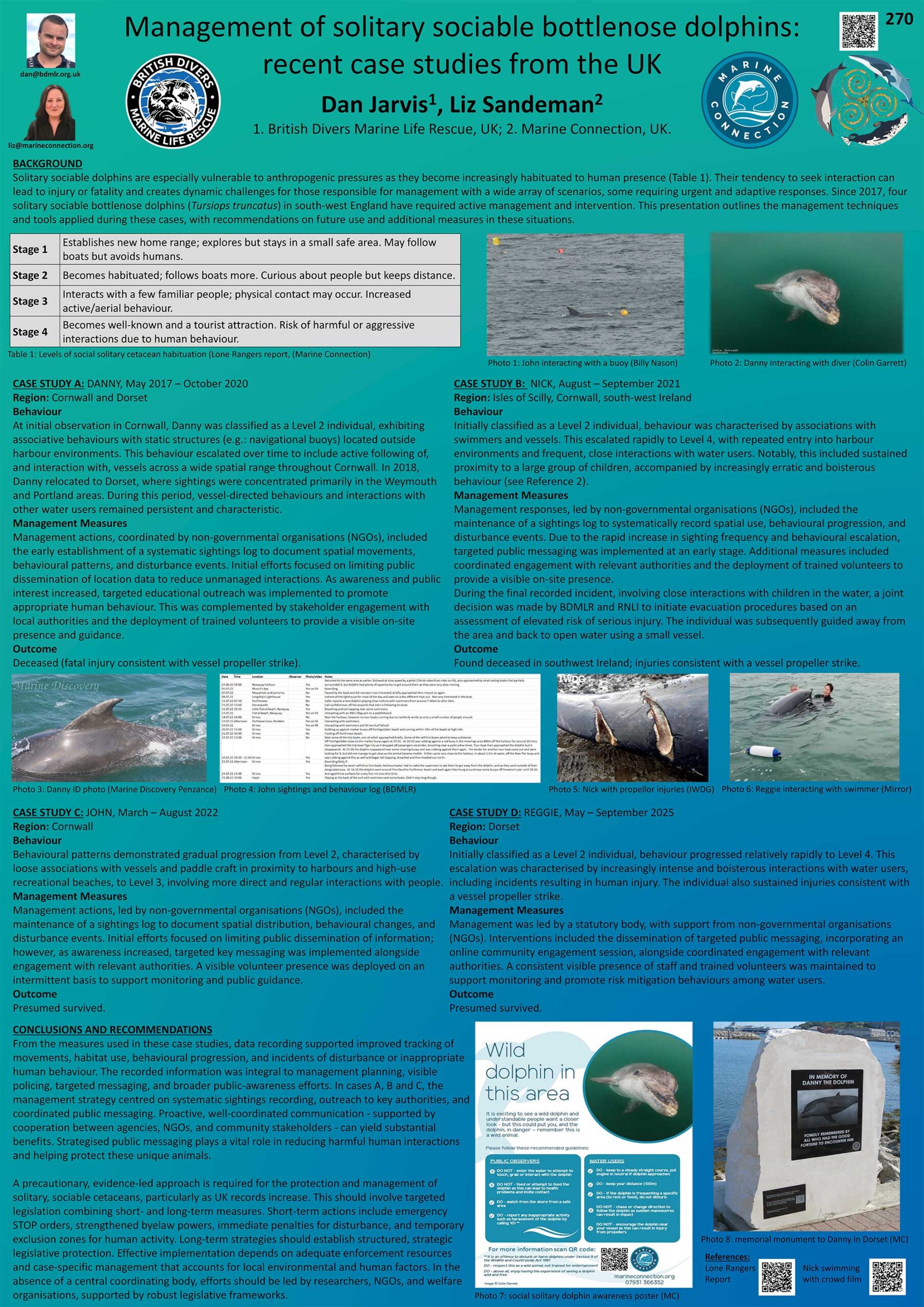
This poster, presented at the European Cetacean Society Conference 2026, explores the management of solitary sociable bottlenose dolphins using four case studies from Cornwall and Dorset to highlight how increasing interaction with humans can lead to injury, disturbance, and vessel strikes.

Help protect solitary, sociable dolphins and whales
By sharing our awareness posters and reporting any sightings of solitary dolphins or whales with details and photos where possible, you can help improve our records and support ongoing conservation efforts.