Over 3,000 dolphins and whales are currently held in tanks around the world for human entertainment.
It may seem harmless — but the reality is anything but. Confined to small, barren enclosures, these intelligent, social animals are stripped of everything natural to them. The result is profound physical and psychological suffering.
This is not education.
This is not conservation.
This is cruelty.
In the Wild
- Live in complex, multi-generational pods
- Travel vast distances daily
- Dive deep in the ocean
- Hunt live prey and choose their own diet
In Captivity
- Endless circling in tanks or sea pens
- Tooth damage from gnawing on walls
- Collapsed dorsal fins
- Chronic stress and depression
Don’t support captive dolphin and whale attractions.
Caring about cetaceans means doing what’s right for them, not what’s right for us.
We can’t change the past, but we can shape the future. Marine Connection is committed to ending the global exploitation of dolphins and whales, working toward a world where cetaceans are respected in their natural environment rather than kept on display. Our work focuses on ending the capture of wild cetaceans for entertainment, stopping breeding programmes for dolphins and whales in captivity, opposing the development of new captive marine facilities, and discouraging ticket sales by tour operators for dolphin and whale shows. We also campaign to shut down live performances involving captive cetaceans and carry out investigations into existing facilities to expose poor conditions, strengthen public awareness, and push for improved laws and enforcement. While significant progress has been made over the years, our work continues until captivity for entertainment comes to an end.
Campaigning for Change
Listen to our impactful ‘No Containment For Entertainment’ anti-captivity messages and help spread the word. By sharing them, you amplify the voices of those who cannot speak for themselves and encourage others to join the movement to end captivity.


DOLPHIN DREAMS – HIDDEN CRUELTY
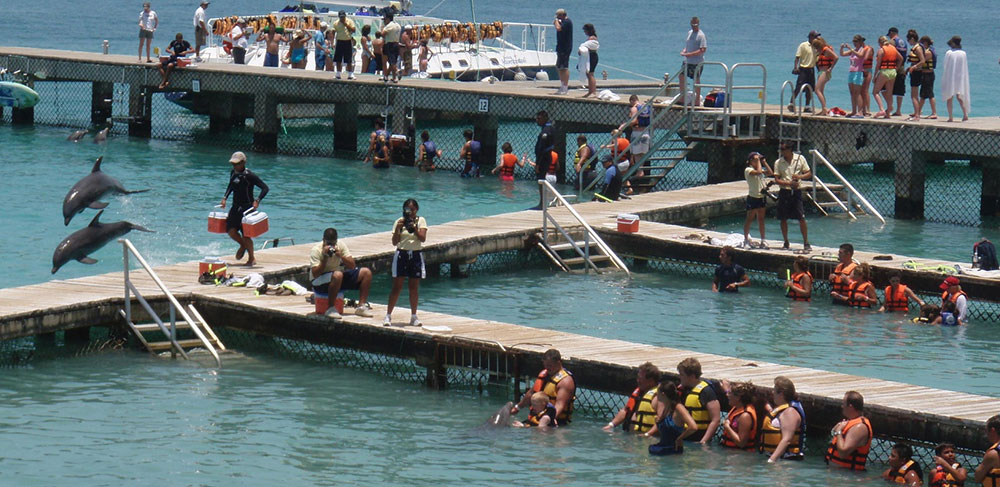
It may look magical – a once-in-a-lifetime encounter, a perfect holiday photo, a dream come true. But behind many “swim with dolphins” experiences is a reality most visitors never see.
Read More
The Hidden Cost to Dolphins
Dolphins used in swim-with-dolphin attractions are often confined to small tanks or enclosed lagoons, far from the open oceans they are built to roam. Instead of swimming miles each day, hunting, socialising, and exploring, they are made to interact with strangers over and over again – every single day of the year.
This constant handling and performance can cause:
- Chronic stress and anxiety
- Illness and weakened immune systems
- Abnormal behaviour
- Shortened lifespans
It’s Not Risk-Free for Humans Either
Dolphins may appear friendly, but they are still powerful wild animals.
There have been documented cases of dolphins biting, ramming, and injuring participants – sometimes causing serious bruising, fractures, and other injuries. Close contact also increases the risk of diseases being passed between animals and humans and vice versa.
There’s a Better Way
If you love dolphins, the most meaningful way to experience them is in the wild – where they can behave naturally and live freely, without being forced to entertain people. Choose responsible wildlife tours that observe dolphins respectfully from a distance, on their terms.
Love Dolphins? Let Them Stay Wild
For highly intelligent, social animals, captivity is devastating. Do not support captive dolphin attractions; choose ethical wildlife experiences instead.

DOLPHIN ASSISTED THERAPY: HEALING MIRACLE OR HARMFUL MYTH
Dolphin-Assisted Therapy (DAT), involving interactions with captive dolphins for psychological or physical disabilities, is widely marketed as beneficial despite limited scientific evidence and serious animal welfare concerns suggesting otherwise.
Read More
Lack of Scientific Evidence
Research has found no reliable evidence that DAT provides long-term therapeutic benefits. Many studies suffer from weak methodology, including small sample sizes and a lack of control groups. Reported short-term improvements are more likely linked to the novelty of the experience, time spent in water, or increased attention during sessions – not the dolphins themselves. Importantly, similar benefits can be achieved through alternative therapies such as swimming, horseback riding, or play therapy, without using captive marine mammals.
Animal Welfare Concerns
Dolphins are highly intelligent, social animals that travel vast distances in the wild. In captivity, confinement can lead to stress, health problems, and abnormal behaviour. In DAT programmes, dolphins are repeatedly required to interact with humans, often without the ability to avoid contact, raising serious ethical concerns. Many DAT facilities also operate as commercial attractions, using unproven therapeutic claims to market dolphin encounters.
The View of Conservation Organisations
Marine Connection opposes DAT because it supports the continued captivity and exploitation of dolphins. We argue there is no ethical justification for using sentient animals as therapeutic tools when effective alternatives already exist.
Conclusion
Current evidence does not support Dolphin-Assisted Therapy as a credible medical treatment. At the same time, the welfare costs to dolphins are high. Humane, evidence-based therapies are available that do not rely on the captivity and exploitation of intelligent marine mammals.