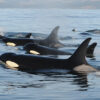
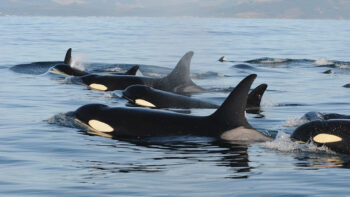
A new open-access catalogue of killer whale calls is allowing researchers and orca enthusiasts to identify distinct populations, clans, and family groups by their vocalisations alone. For the first time, decades of scattered recordings have been brought together in a searchable database, featuring Bigg’s, northern resident and southern resident orcas, with calls filterable by clan and pod.
John Ford has spent more than 45 years recording and cataloguing orca calls along the West Coast. He has welcomed the database as an exciting opportunity to share decades of research with a global audience. The catalogue identifies an orca’s ecotype, clan or subclan and, among resident populations, its pod. Ford said orca calls remain remarkably stable over time and are passed down through generations through vocal learning. Recordings made by the Canadian Navy in Saanich Inlet during the 1950s were clearly identifiable as J Pod, whose distinctive dialect sounds much the same today. However, the catalogue cannot yet identify individual whales within family groups and does not include offshore orcas, a third, less-studied population.
The tool also has significant conservation potential. Underwater microphones and seafloor acoustic monitors can detect whale calls near busy shipping lanes. Identifying calls from the critically endangered southern resident population, which numbers only around 75 whales, could help authorities alert vessel operators to slow down and reduce the risk of fatal collisions.
Ford hopes the database will expand to include more populations and inspire researchers worldwide to develop similar catalogues for their local orca groups.
Browse the Simon Fraser University Orca Sound Call Catalogue and listen to the available recordings