
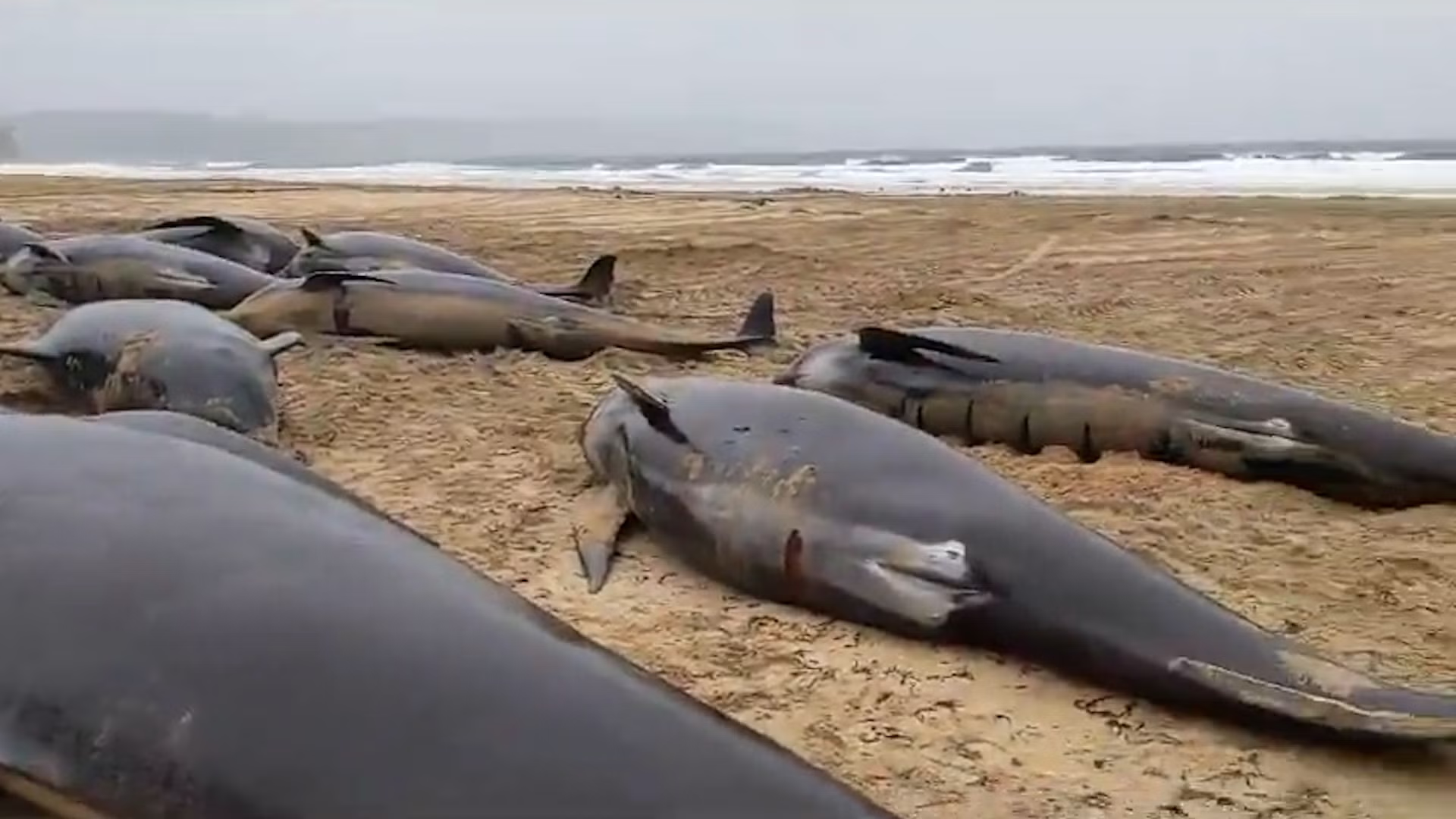
The long-finned pilot whale stranding on the Isle of Lewis in 2023 has provided scientists with rare insight into the species’ deep-water behaviour and complex social lives. New research focusing on the whales’ feeding patterns has shed further light on one of Scotland’s largest mass stranding events. The study, led by the Scottish Marine Animal Stranding Scheme (SMASS), used stable isotope analysis to reconstruct the feeding history of the 55 whales involved. While the likely cause of the stranding had already been identified, this latest research, published in PLOS One, offers important additional evidence about the period leading up to the event. By examining chemical signatures preserved in skin tissue, stable isotope analysis allows scientists to infer diet and habitat use, revealing where these otherwise elusive animals had been feeding in the weeks before they came ashore.
Findings show that the pod had been feeding primarily along the continental shelf edge and slope, deeper offshore waters known to support abundant fish and squid populations during spring and early summer. Although the whales were in good nutritional condition at the time of death, their stomachs were empty, raising questions about their foraging activity immediately before stranding. This study provides the first direct evidence that long-finned pilot whales rely on shelf-slope habitats as important seasonal feeding grounds, while also highlighting how such habitat use may increase their risk of stranding in shallower coastal waters. As a deep-water species, long-finned pilot whales are notoriously difficult to study in the wild, making these findings particularly valuable.
In an earlier report, SMASS noted that a mature female in the pod had experienced a difficult birth, suggesting a possible social trigger for the stranding – an idea consistent with the species’ strong social bonds.