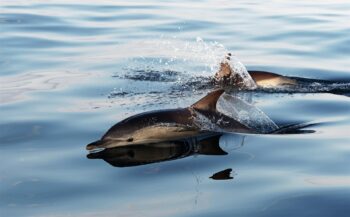
Fishing gear is a major threat to dolphins, whales, and porpoises worldwide. Marine Connection regularly highlights this issue to raise awareness of the devastating impact that fishing nets have on marine wildlife, and a recent study, carried out under the Defra-funded Cetacean Strandings Investigation Programme, found that fishing nets are the most likely cause of death for common dolphins stranded along Cornwall’s coast in the UK.
More than 860 dolphins stranded along the Cornish coast between 2018 and 2024, with the vast majority already dead when they were discovered. Of the 175 dolphins examined, 39% were found to have died after becoming entangled in fishing gear. Gillnets, and possibly drift nets, were the likely cause of the characteristic marks found on most of the dolphins that died because of fishing gear. Acoustic deterrent devices, known as pingers, are designed to warn cetaceans of fishing nets and reduce the risk of accidental capture. They are required on UK fishing vessels over 12 metres (39 feet 4 inches) long that use bottom-set gill or entangling nets in areas where cetaceans are commonly found. Vessels that are not required to use pingers must obtain a marine wildlife licence to operate them, as deliberately disturbing cetaceans is otherwise against the law.
Bycatch – the accidental capture of non-target marine animals such as dolphins and whales during commercial fishing operations – is the biggest threat to cetaceans. It is estimated to kill more than 300,000 cetaceans every year and injure thousands more. These findings highlight the urgent need for effective measures to reduce bycatch and protect dolphins and other marine mammals from the dangers posed by fishing gear.